🧾 Introduction
Beetroot is widely known as a nutrient-rich root vegetable that is commonly used to support overall wellness. It is enjoyed in many forms, including juice, smoothies, and cooked meals.
One common question people ask is whether peeled beetroot still provides health benefits and how often it should be consumed.
The good news is that even without the skin, beetroot retains most of its important nutrients and can be a valuable addition to a balanced diet when taken in moderation.
👉 Quick Summary: Peeled beetroot remains nutritious and can support general health when consumed appropriately.
🌿 Nutritional Value of Peeled Beetroot
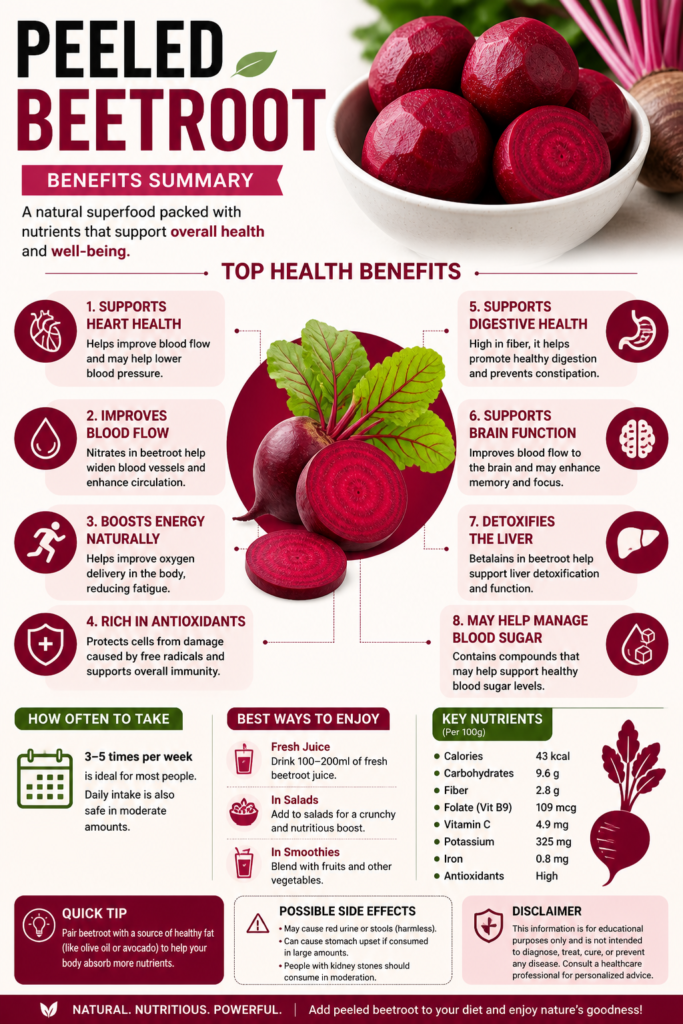
Peeled beetroot still contains a range of nutrients that contribute to normal body function.
These include:
- Folate (Vitamin B9) – supports normal cell function
- Iron – contributes to normal oxygen transport in the body
- Dietary nitrates – associated with improved blood flow
- Fiber – supports digestive health
- Vitamin C – contributes to immune support
According to nutrition research, these nutrients may help support energy levels and overall wellness.
👉 Quick Summary: Peeled beetroot provides essential nutrients that support blood, digestion, and general health.
❤️ Potential Health Benefits of Peeled Beetroot
1. May Support Healthy Blood Flow
Beetroot contains natural nitrates, which the body can convert into nitric oxide. This compound is associated with the relaxation of blood vessels and improved circulation.
👉 Quick Summary: May help support healthy circulation and oxygen delivery.
2. May Help Support Energy Levels
Improved circulation may help the body use oxygen more efficiently, which can support energy levels and reduce feelings of fatigue.
👉 Quick Summary: May contribute to improved energy and reduced tiredness.
3. May Support Digestive Health
The fiber in beetroot supports normal bowel movement and may help maintain a healthy digestive system.
👉 Quick Summary: May help with digestion and regular bowel movement.
4. May Support Normal Liver Function
Beetroot contains plant compounds that are believed to support the body’s natural metabolic processes, including liver function.
👉 Quick Summary: May support the body’s natural detox processes.
5. May Help Maintain Healthy Blood Pressure
Some studies suggest that dietary nitrates found in beetroot may help support normal blood pressure levels.
👉 Quick Summary: May support heart and vascular health.
6. May Support Brain Function
Improved blood flow may also benefit brain function, including focus and mental clarity.
👉 Quick Summary: May support cognitive performance.
🩺 Who Can Benefit from Beetroot?
Peeled beetroot may be useful for:
- Individuals looking to support energy levels
- People aiming to improve digestion
- Office workers with low physical activity
- Athletes and active individuals
- Anyone interested in general wellness
👉 Quick Summary: Suitable for a wide range of people when used as part of a balanced diet.
⚠️ Side Effects and Precautions
While beetroot is generally safe, it should be consumed in moderation.
1. Oxalates
Beetroot contains natural compounds called oxalates. In high amounts, these may contribute to kidney stone formation in susceptible individuals.
👉 🔗 INTERNAL LINK HERE: What Are Oxalates and Why Do They Matter?
2. Natural Sugar Content
Beetroot contains natural sugars, so individuals managing blood sugar levels should consume it in moderation.
3. Red Urine or Stool (Beeturia)
Some people may notice a red color in urine or stool after consuming beetroot. This is harmless and temporary.
👉 Quick Summary: Beetroot is safe for most people but should be consumed in moderate amounts.
☕ How to Prepare Peeled Beetroot
There are several simple ways to include beetroot in your diet:
- Juicing: Blend with water for easy consumption
- Smoothies: Combine with carrot or ginger
- Boiled: Eat as part of meals
- Raw: Grated into salads
👉 Quick Summary: Juicing and smoothies are among the most convenient options.
📅 How Often Should You Take Beetroot?
For most healthy adults:
- 2–4 times per week is generally sufficient
- Daily use may be acceptable for short periods (1–2 weeks), followed by a break
A balanced approach is recommended rather than excessive intake.
👉 Quick Summary: Moderate intake provides the best balance of benefits and safety.
🥕 Best Food Combinations
To improve taste and variety, beetroot can be combined with:
- Carrot and ginger
- Apple and lemon
- Leafy greens such as dandelion
👉 🔗 INTERNAL LINK HERE (Future Article): Benefits of Dandelion for Health
👉 Quick Summary: Combining beetroot with other foods can enhance both taste and nutritional value.
❌ Common Mistakes to Avoid
- Consuming excessive amounts daily
- Relying on beetroot as a cure for medical conditions
- Not washing properly before preparation
- Ignoring overall diet balance
👉 Quick Summary: Beetroot should be part of a balanced lifestyle, not a replacement for proper medical care.
🧠 Conclusion
Peeled beetroot remains a highly nutritious food that can support general health, including circulation, digestion, and energy levels. While removing the skin may slightly reduce fiber content, most of the key nutrients remain intact.
When consumed in moderation and combined with a balanced diet, beetroot can be a valuable addition to everyday nutrition.
👉 Final Summary: Peeled beetroot is safe, beneficial, and best consumed regularly in moderate amounts.
⚠️ Disclaimer
This article is for informational purposes only and is based on general nutrition knowledge and publicly available research. It is not intended to diagnose, treat, or replace professional medical advice. Always consult a qualified healthcare provider for medical concerns.